Is Google's AI Max for Search Campaigns Worth It in 2026?

Google never stops evolving — and in 2025, its biggest bet on the future of paid search arrived in the form of AI Max for Search Campaigns. Launched in beta at Google Marketing Live in May 2025 and rolled out globally through Q3 2025, it's now available to all advertisers worldwide. But with sweeping claims of 14% average conversion improvements and headline-grabbing case studies showing 263% surges in conversions, the question every marketer is asking in 2026 is simple: does this thing actually work?
The answer, as with most things in paid search, is complicated. We've dug through the independent research, real-world test data, and Google's own documentation to give you the most honest assessment available. Here's everything you need to make a smart decision.
1. What Is AI Max for Search?
First, a critical clarification: AI Max is not a new campaign type. It's a suite of AI-powered features you layer on top of your existing Search campaigns. Think of it as a major upgrade toggle — one click activates a collection of targeting and creative enhancements powered by Google's machine learning.
It sits strategically between traditional Standard Search campaigns (where you have high manual control but limited reach) and Performance Max (where automation is total but transparency is minimal). AI Max gives you more intelligence than standard Search while retaining the query-level visibility that Performance Max notoriously lacks.
"AI Max represents the most significant change to how Search campaigns work since responsive search ads replaced expanded text ads."
— GROAS.ai, February 2026
Google's vision is clear: they're moving advertisers away from keyword-list dependency and toward AI systems that predict intent rather than simply match strings. AI Max is the most concrete step yet in that direction — while (theoretically) keeping advertisers in the driver's seat.
2. How It Works: Key Features Explained
🔍 Search Term Matching (Expanded Reach)
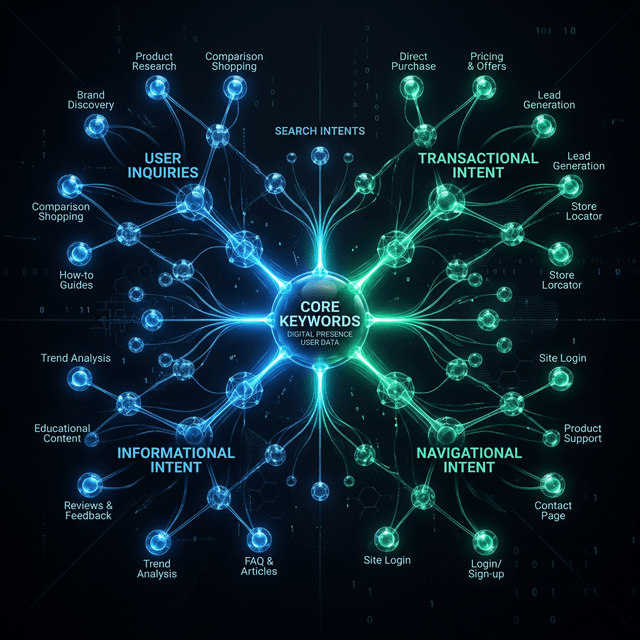
AI Max uses a combination of broad match expansion and keywordless targeting — similar to Dynamic Search Ads — to find relevant queries beyond your existing keyword list. Google's AI learns from your existing keywords, landing pages, and creative assets to identify additional high-intent searches you'd otherwise miss. Your keywords still act as anchors, but the net is cast much wider.
✏️ Text Customization (Auto-Generated Assets)
Previously called "Automatically Created Assets," this feature generates new headlines and descriptions by pulling from your landing pages, existing ads, and keywords. As of Q1 2026, Text Guidelines have rolled out broadly, letting advertisers set brand-safe guardrails — specifying terms to include or exclude — so the AI doesn't go rogue with your messaging.
🔗 Final URL Expansion (FUE)
Instead of always sending users to your specified URL, Google dynamically selects the most relevant page on your website based on the search query. A user searching for a specific product may land on that product page rather than your homepage. This sounds great in theory — but can cause 404 errors if your tracking templates aren't configured correctly.
🎯 Brand Controls & Negative Keywords
AI Max includes dedicated brand settings that control whether your ads appear on competitor searches and how branded terms are handled. Standard negative keywords still apply, and Search Themes help steer the AI toward relevant query categories without hard keyword restrictions.
📊 Smart Bidding Exploration Integration
When paired with Smart Bidding Exploration, AI Max can temporarily lower your effective ROAS target (within a range you set) to probe new traffic that wouldn't have qualified under standard targets. Google's internal data shows this combination produces an 18% increase in unique search query categories converting, and a 19% overall conversion increase.
3. The Real Performance Data (Not Google's Brochure)
Google's marketing materials are optimistic. Independent testing tells a more sobering story — and that gap is worth understanding before you make any decisions.

According to independent analysis of thousands of accounts, 84% of advertisers reported neutral or negative results after enabling AI Max. Achieving even a 10% improvement puts you ahead of the vast majority of advertisers actually running it.
What Google Claims
Google's official figures promise a 14% average conversion lift at similar CPA or ROAS for non-retail brands activating AI Max. For campaigns heavily reliant on exact match and phrase match keywords, the promise jumps to 27%. The headline case studies are even more dramatic: Royal Canin reported a 263% surge in conversions with a 73% CPA reduction. Klook saw 161% growth in conversion value with a 25% ROAS improvement — within a single month.
What Advertisers Actually Experience
Real-world testers — including those using multiple accounts across dozens of industries — paint a more nuanced picture. Many report that the AI pulls from existing ad copy and website content rather than generating truly new, optimized creative. Outdated or inaccurate ad assets can slip through. Some advertisers found that AI Max drove more conversions on paper but that the quality of those conversions was lower than their standard campaigns delivered.
Independent agency tests found that despite promises of time savings through automation, teams often spent more time correcting AI-generated errors than they would have writing ads manually. CTR improvements, when they appeared, were modest.
Avg. Lift
Benchmark
Campaigns
Exploration
4. Honest Pros & Cons
Expands Reach Intelligently
Captures high-intent queries your keyword list was missing, especially valuable for exact/phrase-match-heavy campaigns that have plateaued.
More Transparent Than PMax
You keep query-level Search term reporting — a critical advantage over Performance Max, which historically offered minimal visibility.
New Brand Controls in 2026
Text Guidelines (rolling out Q1 2026) let you set brand-safe messaging guardrails, significantly improving creative quality and consistency.
One-Click Experiment Feature
Built-in A/B testing makes it easy to measure incremental impact without gambling your entire account on unproven automation.
84% Neutral/Negative Results
Independent data shows most advertisers don't see meaningful gains. Cherry-picked case studies set unrealistic expectations.
Auto-Generated Copy Risks
AI pulls from landing pages and old ads, sometimes surfacing outdated or off-brand messaging that requires active monitoring to catch.
Tracking Template Conflicts
Final URL Expansion can break campaigns using static tracking templates, resulting in 404 errors — a technical gotcha.
Conversion Quality Risk
Broader matching means more queries — but not always better ones. Volume can mask quality issues if you're not monitoring.
5. AI Max vs. Performance Max vs. Standard Search
| Feature | AI Max Search | Performance Max | Standard Search |
|---|---|---|---|
| Campaign Type | Search enhancement | Cross-channel campaign | Traditional keyword |
| Query-Level Reporting | ✔ Full visibility | ⚡ Limited | ✔ Full visibility |
| Channels Covered | Search only | Search, Display, YouTube, Gmail, Discover, Maps | Search only |
| Creative Automation | ⚡ With controls | ✔ Full automation | ✘ Manual |
| Keyword Control | ⚡ Expanded + managed | ✘ Minimal | ✔ Full control |
| Best For | B2B, lead gen, services | E-commerce, full-funnel | Compliance, brand, precision |
| Automation Level | Medium-High | Very High | Low-Medium |
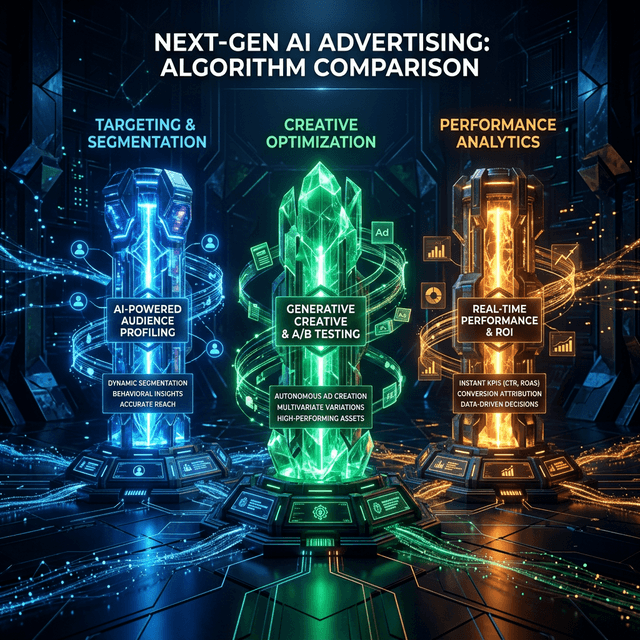
For 2026, Google's recommended "Power Pack" strategy combines all three: Performance Max handling 60–70% of budget for broad multi-channel reach (or 30–40% for B2B), AI Max covering high-intent search with transparency, and Demand Gen campaigns driving awareness. Whether this three-campaign setup makes sense depends entirely on your budget, goals, and team capacity to manage the additional complexity.
6. Who Should (and Shouldn't) Use It
✓Strong Candidates
- →B2B companies, lead generation businesses, and service providers who need search-specific visibility and messaging precision.
- →Advertisers running exact match or phrase match-heavy campaigns that have hit a traffic ceiling and want to expand reach without sacrificing control.
- →Accounts with robust conversion tracking infrastructure, solid negative keyword libraries, and budgets large enough to support AI's learning period (minimum 4–6 weeks).
- →Marketers comfortable monitoring search term reports daily during the initial rollout phase to catch irrelevant queries before they accumulate waste.
×Think Carefully If...
- →You're running brand protection or competitor conquest campaigns where exact messaging and query control are non-negotiable.
- →You have strict legal or compliance requirements governing your ad copy and can't risk AI-generated asset variation.
- →Your tracking setup relies on static tracking templates without properly configured {lpurl} tags — fix this first or URL expansion will break your campaigns.
- →Your account has limited conversion data. AI Max needs sufficient signal to optimize; starving the algorithm of data leads to poor decisions.
- →You're a small team without bandwidth for active monitoring. AI Max is not a set-it-and-forget-it solution — especially in the first 4–6 weeks.
7. How to Test It the Right Way
If you decide to give AI Max a shot, resist the temptation to flip it on everywhere at once. Here's a methodical framework that reduces risk while giving the technology a genuine chance to prove its value:
Verify your tracking templates support dynamic lpurl tags. Clean up your negative keyword list so the expanded matching doesn't amplify existing waste. Review your landing pages — Final URL Expansion will only help if your site has genuinely relevant deep-page content.
Run a 50/50 split test on your single highest-performing campaign — not your whole account. Use the one-click experiment feature to create a clean, statistically valid comparison. Commit to running it for a minimum of 4 weeks, ideally 6.
Check your Search Terms report every day during the initial phase. AI Max will surface query patterns you've never seen before — some will be valuable, others irrelevant. Add negative keywords proactively. This front-loaded effort pays for itself.
As Text Guidelines roll out in Q1 2026, set them up the moment they're available for your account. Defining brand-safe inclusions and exclusions is the single most effective way to prevent AI-generated copy from damaging your brand voice.
A 10% improvement in AI Max beats 84% of advertisers using it. Don't benchmark against Google's cherry-picked 263% case study. Measure conversion quality alongside conversion volume. Cheaper leads that don't convert are worse than fewer, higher-quality ones.
AI Max Is Worth Testing — But Not Worth Trusting Blindly
Google's AI Max for Search is a genuinely useful tool for the right accounts, but it's not the performance revolution the press materials suggest. The 84% neutral-or-negative independent result rate is a number every advertiser should internalize before enabling it. That said, for B2B, lead generation, and service businesses with exact/phrase-match-heavy campaigns, robust tracking, and the bandwidth for active monitoring, AI Max in 2026 represents the best middle ground between manual control and full automation that Google currently offers. Run the experiment. Monitor aggressively. Scale only what demonstrably works.
Final Thoughts: The Bigger Picture
AI Max isn't just a feature update — it's a window into where Google is taking Search advertising. The trajectory is unmistakable: less reliance on keyword lists, more trust placed in machine learning systems to determine relevance and intent. For advertisers, the strategic question in 2026 isn't whether to eventually adopt AI-driven campaign management. It's how fast to move, and how to maintain meaningful control along the way.
AI Max, tested methodically with clear success criteria and proper monitoring, is a reasonable bet to make right now. For most accounts, don't expect it to transform your results overnight — but if you're willing to do the setup work and give it the right conditions to learn, there are real gains on the table.
The winners in 2026 won't be the advertisers who blindly adopt every new feature Google releases. They'll be the ones who test rigorously, measure honestly, and scale only what earns its place in their strategy.
"The most successful advertisers won't choose between AI automation and campaign control — they'll leverage both strategically."
— Industry Consensus, 2026